can’t relax during a massage
Why is it sometimes hard to relax during a massage?
There is no right way to relax. Sometimes your body needs clarity, time, and the freedom to choose before it can feel at ease.
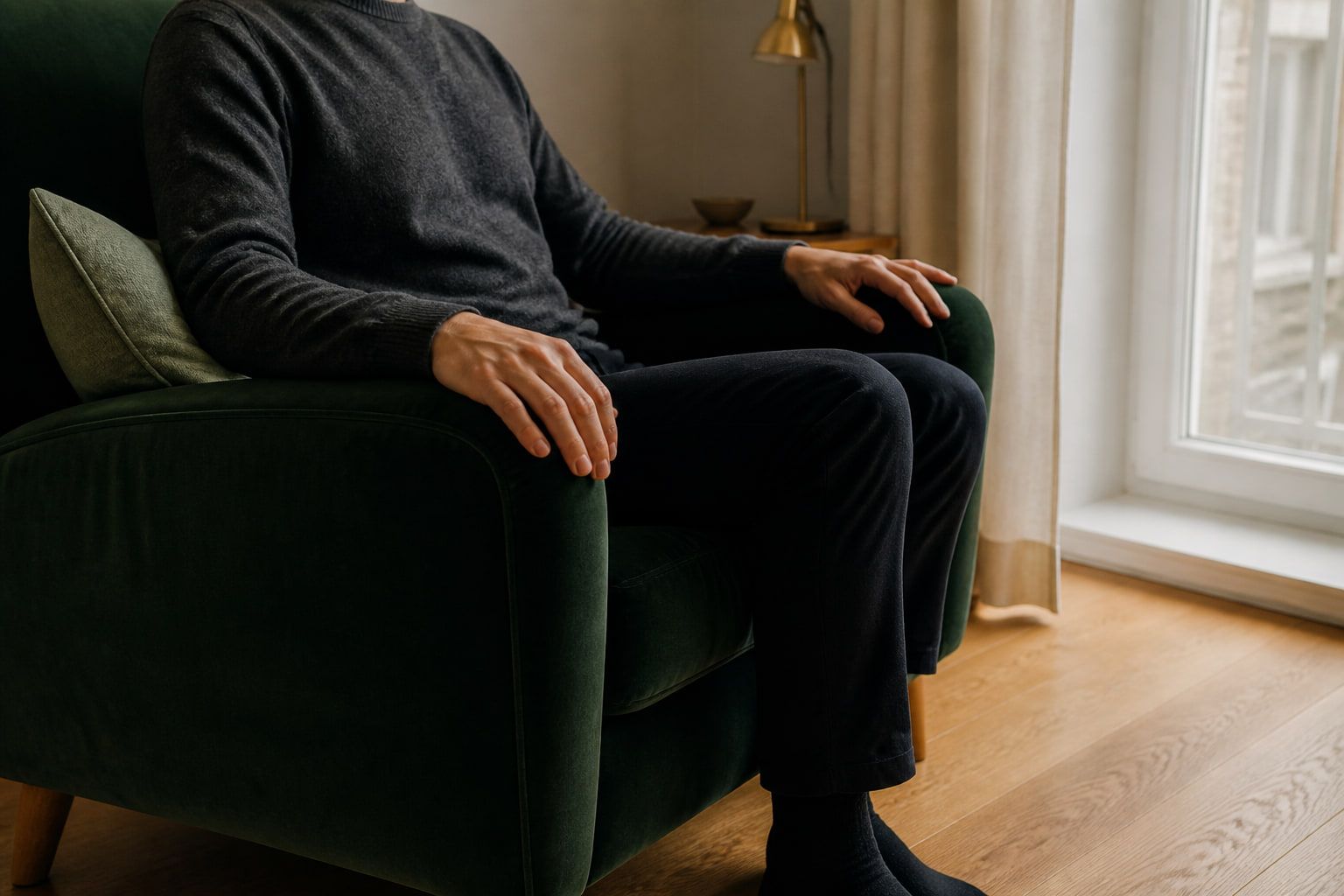
If you find it hard to relax during a massage, it does not necessarily mean anything is wrong. Relaxation is not a switch that instantly quietens the body and mind. A new setting, an unfamiliar person, touch, uncertainty about what happens next, or the effort to “relax properly” can keep you alert. Sometimes comfort comes gradually; sometimes it does not come that day at all. Either can be okay.
You cannot relax on command
Massage is often portrayed as an inherently peaceful experience: you close your eyes, stop thinking, and seem to leave everyday life behind in an instant. In reality, you can be lying comfortably and still notice every sound, keep track of the time, wonder where to put your hands, or worry that you are getting in the practitioner’s way.
The thought “I can’t relax during a massage” often has a second layer: “So I must be doing something wrong.” Monitoring yourself in this way can take up even more of your attention. Instead of assessing how relaxed you have become, a gentler approach is to notice what is happening now. Perhaps your shoulders are still tense. Perhaps you want to talk. Perhaps the silence feels overwhelming. This is information about your experience, not a score for how well you are doing.
Relaxation is not a task you have to perform well.
Uncertainty can keep you alert
At your first massage, tension may come from very specific questions. How will the session begin? Will you be able to say if something feels uncomfortable? How much will you need to talk? What happens if you want to sit up, open your eyes, or stop?
Research into people’s experiences of massage does not identify one universal reason why someone might struggle to relax. Yet qualitative studies repeatedly raise themes of comfort, clear communication, trust, personal attention, and the opportunity to take part in decisions. A cautious inference is that, for some people, a process they understand may feel easier than a vague promise to “just let go”.
Before your first visit, it may help to read how to prepare for your first massage. Preparing does not mean achieving the perfect state of mind. Sometimes it is enough to know how long the session lasts, what kind of experience it offers, and which questions you would like to ask. If timing is a source of uncertainty, you may also find it useful to read how long a massage lasts and why the length matters.
The pressure to relax
Anxiety before a massage can sometimes grow not because of the experience itself, but because of the expectation that it must be special. Perhaps you have waited a long time for this hour. Perhaps someone close to you gave it to you as a gift. Perhaps you have come after a difficult week, longing finally to feel nothing and think about nothing.
But rest does not always look like sleep or a completely quiet mind. It may be something much smaller: finding a more comfortable position, noticing one slower breath out, allowing yourself not to keep a conversation going, or making a clear request. These are not guaranteed results of a massage. They are simply possible moments that you do not need to force.
If you are choosing the experience for someone else, the expectation to relax can be even stronger. Before giving a massage as a gift, it is worth considering more than the appeal of the idea: whether the recipient wants to be touched, has the time, and will feel free to choose. We explore this in how to choose a massage gift voucher thoughtfully.
Comfort matters
Sometimes the answer to feeling more at ease during a massage has little to do with your thoughts. You might be too warm or too cold. A sound may be distracting, the light too bright, the position uncomfortable, or the pressure or pace of touch unpleasant. Sensory needs differ, so music that soothes one person may be another source of stimulation for someone else.
Mentioning these things does not make you demanding. The practical principle is simple: you can talk about your comfort. The Lithuanian Massage Therapists Association’s code of ethics emphasises respect for a person’s needs, expectations, and concerns, open communication, and not acting against a client’s wishes. International research on consent also discusses more than the initial “yes”: consent is an ongoing process in which decisions can be adjusted during the experience.
This does not mean every practice follows the same procedure. Before your visit, you can ask directly how boundaries, positioning, touch, and breaks are discussed. The answer should help you decide whether the service feels right for you.
Trust can take time
Your first session with someone who will be touching your body is different from your fifth. Even if the practitioner is attentive, you do not yet know one another. Trust does not necessarily appear simply because you have booked and arrived.
Some people feel more at ease after a short conversation. Others find talking distracting. One person likes to know what will happen next; another finds that too much explanation makes it harder to settle into the experience. A small qualitative study of the massage relationship illustrated this tension: the same participant valued communication while also feeling that she was spoken to too often. It is a useful reminder that “more communication” does not automatically mean “better”. What matters is whether it meets the person’s needs.
That is why a personalised massage and the conversation before it can matter, as an opportunity to say what you want or what you are still unsure about, rather than as a promise to make tension disappear.
A few choices for this moment
If you are wondering how to relax during a massage, there is no need to turn it into another obligation. You can choose just one thing that feels easy:
- say that this is your first time and you feel tense;
- ask for less conversation or more explanation, or the other way round;
- open your eyes, change position, or ask for an adjustment to the surroundings;
- ask for a slower pace, a different touch, a pause, or an end to the session.
A few gentle breaths out help some people, but there is no need to force deeper breathing. NHS guidance emphasises breathing only as deeply as feels comfortable, without forcing it. If focusing on your breath irritates you or makes you feel more tense, you can leave this approach aside. You might simply notice the support beneath your body or name three sounds you can hear. These are general suggestions for directing attention, not treatment or a description of a Láurem session.
MAJA does not begin with a demand to relax
MAJA is Láurem’s three-hour bodywork experience. A session with Laura Kievlić begins with a conversation, and what follows takes account of how you feel and your boundaries. This time is not a test of how quickly you can settle, nor is it treatment for anxiety or other mental health difficulties.
If you find yourself thinking “I can’t relax during a massage”, it may be helpful to say this in your own words. You do not need to know the reason or have a solution beforehand. Sometimes clarity begins with a simple sentence: “I don’t feel at ease yet”, or, “I’d like a little time to get used to being here.”
What if the tension does not go away?
That can happen. You can continue only for as long as the experience feels acceptable to you, ask for a change, or stop. Massage is not an endurance test, and paying for the time does not take away your right to change your mind.
If significant anxiety recurs outside massage sessions, interferes with daily life, or concerns you, consider speaking with your GP or a mental health professional. Massage should not replace healthcare that you need. This distinction also matters because research on massage and anxiety is not strong enough to support universal promises of treatment.
Frequently asked questions
Is it normal to feel tense during a first massage?
Yes. A new environment, an unfamiliar process, and touch can feel uncomfortable. It is possible to feel tense at your first massage, and relaxation does not have to happen straight away. You can ask beforehand how the session will unfold and let the practitioner know it is your first time.
Can I talk during a massage?
In general, yes, especially if talking helps you feel more comfortable or you want to share how something feels. There is no single rule about how much conversation there should be. It is worth agreeing on how you would like to communicate before the session begins.
Can I ask for quiet?
Yes. You can say that you would prefer less conversation or quiet, apart from necessary questions about your comfort. Asking is not rude. The practitioner may still speak briefly when they need to explain something or check how you feel.
Do I have to close my eyes during a massage?
No. Closed eyes are not proof of relaxation. If you feel calmer with your eyes open, you can leave them open. Your head and body position should also be adjusted to what feels comfortable for you.
Can I ask for a break or stop completely?
Consent rests on free choice, so you can say that you would like to pause or stop. It is useful to clarify the practice’s arrangements before your visit, but physical or emotional discomfort is not something you have to endure in silence.
How do I say that the touch or pressure does not feel right?
A short, direct sentence is enough: “A little gentler, please”, “This area feels uncomfortable”, or, “Please don’t touch here.” You do not need a long explanation or a justification for what you feel. If your request is not acted on, you can ask to stop.
What if a breathing exercise does not help?
Stop doing it. Focusing on your breath is just one optional approach, not a requirement for relaxing. You can return to breathing naturally, open your eyes, notice the support beneath you, or say that you feel uneasy.
Is massage suitable if I feel very anxious beforehand?
An article cannot determine that for you. You can discuss how you feel beforehand and ask how the session is organised. If you have concerns about a health condition or safety, speak with a doctor. Massage is not a substitute for treatment for anxiety disorders.
Sources and further reading
- Lithuanian Massage Therapists Association. Code of Professional Ethics for Members. Guidance on needs, concerns, personal wishes, open communication, and unsupported promises.
- National Health Insurance Fund of Lithuania. Patients’ Rights and Responsibilities. The principle of informed, freely given consent in healthcare.
- National Health Service. Breathing exercises for stress. Guidance on comfortable, unforced breathing, reviewed in 2026.
- National Center for Complementary and Integrative Health. Anxiety and Complementary Health Approaches. A cautious overview of research on massage and anxiety and the limits of the evidence.
- Porcino AJ, Page SA, Boon HS, Verhoef MJ. Negotiating consent: exploring ethical issues when therapeutic massage bodywork practitioners are trained in multiple therapies. A qualitative study of ongoing consent in massage practice.
- Smith JM, Sullivan SJ, Baxter GD. The culture of massage therapy: valued elements and the role of comfort, contact, connection and caring. Themes of comfort, trust, and participation identified by clients.
- Clark T. The Psychotherapeutic Relationship in Massage Therapy. A small qualitative study of boundaries, comfort, and the complexities of communication.
- Stewart-Richardson JL et al. What is Effective in Massage Therapy? Well, “It Depends…”. Experienced massage practitioners’ perspectives on individual differences and adaptation.
- Buono RA, Nygren M, Bianchi-Berthouze N. Touch, communication and affect: a systematic review on the use of touch in healthcare professions. A systematic review of touch as an individual, culturally sensitive, and relational practice in healthcare.
Discover MAJA at your own pace.
Laura personally confirms each booking for the three-hour bodywork session.
Write to Laura