do you need to undress for a massage
Do you need to undress for a massage? Privacy, boundaries and choice
Clothing and covering depend on the session and what you agree with the practitioner. Your boundaries always matter.
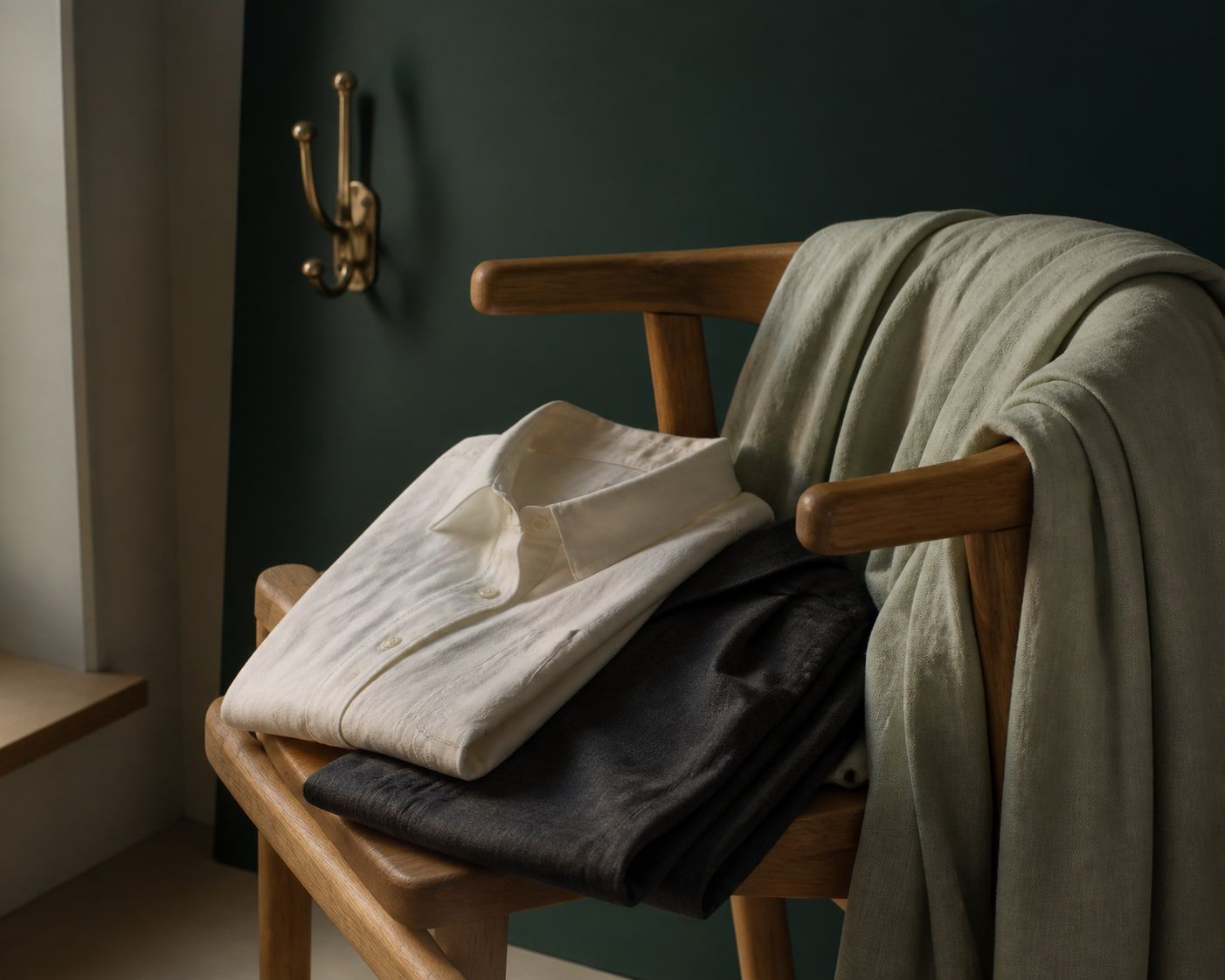
The short answer: it depends on the type of massage or bodywork and what you agree with your practitioner. Some approaches work through clothing; others involve direct contact with the skin. But whether you need to undress for a massage, and how much, should never be left unspoken. You can stay dressed, remove only some clothing, ask for different covering or decline touch in a particular area. Everything should be open to discussion before you begin and again at any point during the session.
Why is there no single answer?
The word “massage” covers a wide range of practices. Some take place seated and fully clothed. Others use loose cotton clothing, while certain techniques involve direct skin contact and sheets or towels for covering. Even the same type of session may be offered differently from one place to another.
Descriptions from Lithuanian providers illustrate this well. One studio, for example, says it supplies special clothing for Thai massage and suggests different preparation for oil massage. That is one provider’s approach, not a universal rule. It helps explain the key point: only your chosen practitioner can tell you exactly whether you need to undress, by explaining how they work.
If the answer is vague, ask more specific questions: will touch be through fabric or directly on the skin, which areas of the body are involved, what will cover you, and can you remain clothed throughout? These questions are not an inconvenience. They help you make an informed decision that feels right for you.
What does privacy look like in practice?
Privacy during massage begins before any touch. A clear approach may include a calm explanation of how to prepare, a private space to change and a practitioner who returns only after checking that you are ready. If a sheet, towel or other fabric is used, you should discuss what it will cover and when it will be moved.
International professional standards do not form a single set of rules that applies everywhere, but similar principles recur. The American Massage Therapy Association emphasises clients’ right to undress only as far as they feel comfortable, change in private and ask for a massage to stop. Ontario’s massage therapy regulator describes clothing and draping as a physical boundary between areas being touched and those that are not. It also requires practitioners to discuss whether touch will be through fabric or directly on the skin.
The Australian Association of Massage Therapists has its own specific standards, including private changing, an explanation of draping in advance and adjustments for clients who wish to remain partly or fully clothed. Its clothing requirements cannot automatically be applied in Lithuania or to every form of bodywork. Still, the underlying principle is useful: covering and boundaries should be handled with care, rather than left to guesswork.
Does saying “yes” at the start mean agreeing to everything?
No. Consent relates to a specific action, an area of the body and a particular moment. Agreeing to a massage does not automatically mean agreeing to every technique, any level of pressure or touch anywhere on your body. Nor does consent become irrevocable simply because you have arrived, undressed or started the session.
Ontario’s professional standard on consent states that consent must be voluntary and that practitioners must remain alert to any change and seek consent again when needed. The Lithuanian Massage Therapists Association’s code of ethics requires its members to consider clients’ needs, expectations and concerns, and not to act against their wishes. These professional principles help explain why boundaries in massage call for more than a formal conversation at the beginning.
Sometimes a person does not say “no” straight away. They may feel confused, freeze, try to endure what is happening or worry about seeming impolite. Trauma-informed communication emphasises physical and psychological safety, transparency, collaboration, having a voice and being able to choose. In practice, this means making room to pause, ask and accept a changed answer without pressure, rather than assuming that silence means agreement.
You can keep it very simple:
“I’d like to keep my underwear on.”
“Please don’t touch this area today.”
“Please let me know before moving the sheet.”
“I only want to be touched through fabric.”
“Let’s stop. I need to get dressed.”
You do not have to give a reason, justify your sensitivity or apologise.
What should you wear if you do not yet know what to expect?
Loose clothing that is easy to change in and out of is usually the simplest choice. If you do not know whether oil will be used, you may prefer to avoid particularly delicate fabrics and bring spare underwear. It can be helpful to leave jewellery and anything else that might get in the way at home, or put it somewhere safe before the session.
This is practical preparation, though, not an obligation to undress. The best time to ask what to wear is when booking: “Does your approach require a change of clothes?” and “Can I stay in my own clothes?” If a particular technique requires access to the skin, the practitioner should explain the alternatives. You can then choose another approach, change the plan or decide not to go ahead.
You will find more general preparation tips in our article on your first massage and how to prepare. If your concern is pressure or discomfort rather than clothing, you may also want to read whether massage should hurt.
What if you feel uneasy about your body, identity or past experiences?
Your body does not have to look a certain way for you to come to a massage or bodywork session. Scars, body hair, changes in weight, disability, menstruation, gender identity or a different relationship with touch are no reason to give up your privacy. You can share only as much in advance as will help you agree on a comfortable way forward.
If you are unsure how to begin, a simple sentence is enough: “It matters to me that you explain before touching each new area.” You can also ask for more time to change, an extra sheet, a different position or for a particular area not to be touched at all. If the chosen method cannot accommodate this, an ethical response should be clear, calm and free of judgement.
Your choices
- Ask whether you need to undress for the massage, and why.
- Choose how much clothing you want to remove.
- Agree in advance which areas may and may not be touched.
- Ask for more covering, a different kind of touch or a pause.
- Change your mind and stop the session at any time.
These are primarily principles of client autonomy and professional ethics. In Lithuania, patients’ legal rights to informed consent, privacy and confidentiality clearly apply to personal healthcare services. Information from the State Tax Inspectorate also makes clear that medical massage and body care for physical wellbeing are not the same category of activity. The legal status of a particular service, professional requirements and the appropriate complaints process may therefore differ.
How can you discuss this before MAJA?
MAJA is a three-hour experiential bodywork session that begins with a conversation and respects your boundaries. However, exact details about clothing, draping, areas of touch and techniques have not currently been confirmed publicly. Whether you need to undress during MAJA should therefore be clarified directly with Laura, rather than guessed.
Before booking, you can ask: “What would you recommend wearing?”, “Can I remain clothed throughout?” and “How do we agree on the areas I don’t want touched?” This conversation is not a test with a correct answer. Its purpose is to make sure you both have the same understanding of the experience ahead.
Read more about the person behind the practice on the meet Laura page. We explore why dialogue matters in a personalised session in when massage begins with a conversation.
What if a boundary has been crossed?
If something worries you, you can ask to stop, get dressed and leave. Your response does not have to be immediate or eloquent. Even if you froze and said nothing at the time, that does not turn an unwanted action into something you consented to.
Once you are somewhere safe, you can write down what happened, when it happened and what was said. The next step will depend on the type of service and the provider’s status: you may be able to contact the organisation itself, a professional association, the body that oversees the service or, if you suspect a crime, the police. If you are unsure what applies to your situation, seek advice from the relevant organisation rather than relying solely on a general article online.
A good session does not leave you guessing how much you have to undress or what you must quietly accept. Clarity, privacy and the freedom to change your mind are more than added comforts. They are what allow you to choose touch freely.
Frequently asked questions
Do I have to undress completely for a massage?
Not always. It depends on the method, but you can remove only as much clothing as you feel comfortable with, or ask about working through clothes. If the chosen technique cannot be performed on those terms, the practitioner should explain this before you begin and offer any available alternatives.
Can I keep my underwear on?
Yes, you can express that preference. What is possible varies by method, so agree on how the session will work and how your clothing will be protected if oil is used. If the practitioner has a different approach, they should explain it in advance. The decision to take part remains yours.
Can massage be done through clothing?
Some practices take place entirely through clothing, others can be partly adapted, and some require direct skin contact. Ask whether another technique or area of the body could be chosen if you remain dressed. This is a practical agreement, not a test of your courage.
What should be covered during a massage?
There is no universal draping rule for every country and every practice. Professional massage standards often call for areas not being touched to remain covered, for movements of the sheet or towel to be clearly discussed, and for intimate areas to be kept private. Before the session, ask the provider to explain their approach specifically.
Can I change my mind once the massage has started?
Yes. You can change your mind about pressure, an area of the body, clothing or the whole session, and ask to stop. Earlier consent is not a promise to endure something that no longer feels acceptable.
What can I say if I do not want a particular area touched?
A direct sentence is enough: “Please don’t touch this area” or “I only want touch through fabric here.” You do not have to share your personal history or explain why. A clear boundary should be accepted without pressure.
How can I find out about clothing and draping for MAJA?
Exact details about MAJA’s clothing, draping, areas of touch and techniques have not been confirmed publicly. Contact Laura directly before the session to discuss how much clothing you would like to keep on, which areas you are comfortable having touched and how you can ask for a pause. MAJA begins with a conversation, so these questions can be part of your agreement before any touch.
Sources and further reading
- Lithuanian Massage Therapists Association, Code of Professional Ethics for LMA Members, accessed 2026-08-30.
- Ministry of Health of the Republic of Lithuania, Patients’ Rights, accessed 2026-08-30.
- State Tax Inspectorate, Restrictions, Requirements and Obligations, accessed 2026-08-30.
- American Massage Therapy Association, What to Expect at Your Massage Session, accessed 2026-08-30.
- College of Massage Therapists of Ontario, Draping and Physical Privacy, accessed 2026-08-30.
- College of Massage Therapists of Ontario, Consent, accessed 2026-08-30.
- Substance Abuse and Mental Health Services Administration, Trauma-Informed Approaches and Programs, accessed 2026-08-30.
- Association of Massage Therapists, Massage Therapy Code of Practice, accessed 2026-08-30.
- ReflexPoint, Going for a Massage? What Should You Wear?, updated 2023-04-25, accessed 2026-08-30.
Discover MAJA at your own pace.
Laura personally confirms each booking for the three-hour bodywork session.
Write to Laura